May 2026 – Watercolour Painting – Industrial Relations by J.E. Wigston
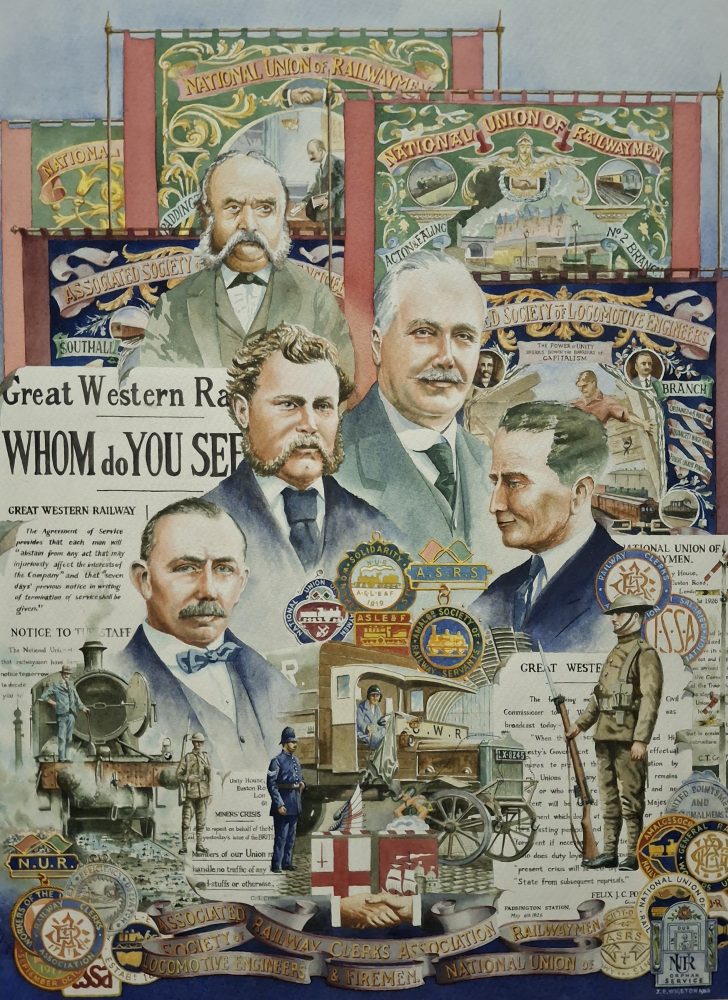
May 2026 marks 100 years since the General Strike. In commemoration of this our Object of the Month for May is a watercolour painting called Industrial Relations.
Industrial Relations was painted by John Edwin Wigston (b. 1939), a member of the Guild of Railway Artists. It features imagery from the General Strike, showing both GWR and trade union positions.
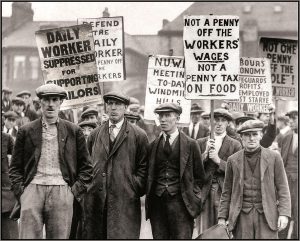
General Strike protesters in the North East of England (Image courtesy of Shawshots / Alamy)
The General Strike took place over nine days from 4th May 1926. The strike was called by the Trades Union Congress (TUC) in support of disgruntled coal miners over reductions in pay and increase in working hours. Railway workers were encouraged to strike by their unions and over 80% of the GWR’s workforce withdrew their labour.
Featured in the painting are five men who were senior members of railway trade unions. They are:
Top – Charles Perry, founder of the Associated Society of Locomotive Engineers and Firemen (ASLEF)
Centre Right – John Bromley, General Secretary of ASLEF (1914-1931)
Centre Left – F.W. Evans, General Secretary of the Amalgamated Society of Railway Servants (1874-1884) Dismissed from the railway for being in a union.
Bottom Right – F.L Tonge, member of the executive of the Railway Clerks Association.
Bottom Left – J.H. Thomas, General Secretary of the National Union of Railwaymen (NUR)
J H Thomas of the NUR was a Welsh trade unionist. He started his political career in industrial hotspots such as Swindon and Derby. His position as General Secretary of the NUR during the strike was criticised for encouraging it to be called off (for fear of it escalating to dangerous levels), and without negotiating employment terms with railway workers.
At the centre of the artwork is an image of a woman driving a GWR lorry. This is Mrs Talbot, one of about 40 women who volunteered for the GWR during the General Strike. The GWR relied heavily on volunteers during the strike to maintain their services. 1571 volunteers from outside the company were employed during the nine day period. The GWR provided emergency training for these volunteers in various roles such as signalling, engine driving and guard duties.
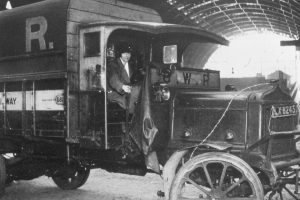
Mrs Talbot driving a GWR lorry during the General Strike.
John Wigston has also included two soldiers in his painting. Soldiers played a vital role for the country’s railways. They assisted in keeping the peace, particularly during heated strike rallies and protected workers who chose to remain at work. Soldiers also helped out at large stations, such as Paddington, moving onward goods as they came off the trains.
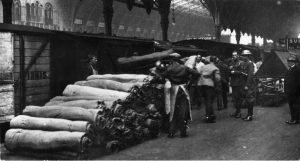
Royal Horse Guards on fatigue duty at Paddington Station during the strike.
After nine days the strike ended with no formal agreement made for the miners. Whilst the rest of the country went back to work the miners remailed on strike until November 1926.
Find out more about the GWR and the General Strike in our new exhibition – The General Strike – The GWR’s Story in Print. Open now until Spring 2027.


